|
| De Warande in Brussels |
“De
WARANDE” in Brussels.
Hotel Empain a
unique meeting place in the heart of Brussels.
_____________________________
__________________________
A blog entry from: https://www.patrickdamiaens.info
In the
characterful heart of Brussels, located between the embassies, on the edge of
the park of Brussels, also known as the Warande Park, you will find the mansion
”De Warande”, a meeting place for Flemish entrepreneurs and their Belgium
guests as well many international guests.
It was
built at the end of the 18th century. At that time, it was known as Hotel
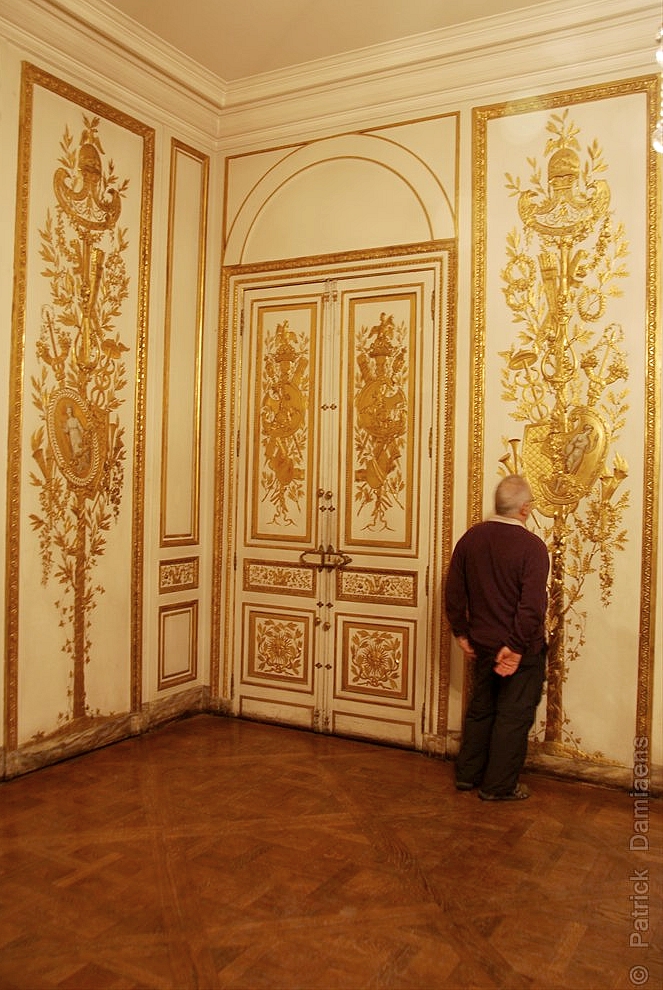
Empain. Particularly beautiful and elegant, with decorated paneling (boiserie)
interiors that enhance the residence. The diversity of style periods with their
distinctive ornamentation that adorns the building, offers the opportunity to
go deeper into the decoration of this beautiful meeting place in Brussels.
 |
| Manor House “De Warande”, Hotel Empain. |
De Warande,
an exclusive club.
De Warande
is housed in the former Hotel Empain and 28 year ago it was specially set up
and designed as a place where important Belgian people in Brussels could meet,
in a discreet and casual atmosphere.
The life of
wealthy people is often busy and stressful. In addition, our society is
changing at a rapid pace. De Warande wants to be the Belium beacon to blend the
social and professional activities seamless for her special members.
De Warande
is a meeting place with many facets… Members can enjoy a gourmet top meal, plan
meetings in one of the salons or connect with the intellectual group fed by a
wide range of Warande’s activities.
De Warande
wants to be an exclusive club that creates a first-class meeting place, with
top-level service. With its stylish spaces and quality services, they try to
offer each member a stimulating experience. As the management states, “We
create a framework where leading Belgians can expand their network and
horizons, on their own way”.
Members and
their guest enjoy outstanding service and personal approach.
 |
| Orientation: De Warande in Brussels. (De red dot on the map). |
 |
| De Warande Brussels with the beautiful monumental hall stairs. |
The “De
Warande” from my point of view.
In
mid-2016, during my research work, I accidentally came across the website of
“De Warande”, in which a particular photo drew my attention. A detail from a
beautiful paneling from “The Lounge”, a beautiful composition with French
influences was what struck me.
Because I
am always looking for special and interesting blog items, I contacted the
management of this club/meeting place to get information about the possibility
to dedicate a blog item to “The Lounge”. I quickly received a positive response
and I counted with their benevolent cooperation.
Information,
texts, archive material was also available to me. In addition, I noticed that
not only “The Lounge” is decorated with an elegant paneling, but other rooms of
De Warande too. My curiosity for this beautiful place increased during the same
week, when I had the appointment for a visit.
And that
was why I went with one of my students of ornamental woodcarving, in the
direction of Brussels in mid-july 2016.
De Warande
is located in the royal district, on the corner of the Hertogenstraat and the
Zinnerstraat. The latter does not really work more as a street, but rather as
parking area for the members of De Warande. In the building complex on the side
of Zinnerstraat, the US Embassy has also taken advantage of this “street”.
Yes… we
should have expected this; after a security check of about 15 minutes, our
entry was granted. The experience reminded me of a border control between East
and West Berlin in 1983. For a bribery (in the border), a can of Coca-Cola or a
package of Malboro did miracles then, but I had a vague suspicion that this would
not be the case here and now.

We received
a particularly warm reception from the Communications Manager of De Warende,
Mr. Tijs Michiels. We visited several rooms where we felt at home, in an
stylish environment where the almost natural beauty precents itself in a impressive way.
Here, the
architecture offers the artist a medium in which he can meet nature to get
inspired and invited exploring his/her creativity.
The
arrangement and decoration of the interiors show that in the beginning of the
last century (17th and 18th century) the old traditional ornamentation of the
building was restored by some customer, designers and craftsmen. Not that this
tradition has been lost, but for s short time is was displaced by a “modern
style”.
By that time, Brussels had won its famous of
an Art Nouveau city, the city where this innovative architecture was created
and was blooming. The Art Nouveau had its peak in 1907; and the traditional
forces, that never slept on their laurels, once again took its place and got back
under King Leopold II, who set the tone.


Paneling
with ornaments (boiserie).
This
historic building, located in the royal district of Brussels, has several
remarkable wall panelings (wooden wall cladding or boiserie); lovers of elegant
and high quality wood carving will not be disappointed. The diversity of styles
will give me the opportunity to publish many blog entries in the future, about
De Warande’s paneling and ornamentation.
The use of
French decorative styles, the exuberance in ornamentation, the partitioning in
the paneling and the composition of the carvings are very diverse and
tastefully designed. One could use the interior of the Hotel Empain, executed
with high skilled workmanship, as example for a lesson in “Architectural
History of the Beautiful Styles”. Architectural aesthetics and art are a blast
to the eyes.
 |
| De WARANDE in Brussels / Decorated panelings with ornaments. |

The rooms:
The Empain
salon is accessible from the hall stairs.
About 50 square meters of oak paneling worked by the Mechelse sculptor
Frans Louis, shows different episodes of Jean d’Arc’s life. The piece is made
in particularly high quality wood carving. An authentic Reinassance fireplace
was sculptured in marble and is of Venetian origins.
Two
sculpted columns with gold-leaf adorns the chimney mantel (trumeau) and shows
the last supper. Certainly, an appropriate them for this dining room. The
polychrome work is Italian and 17th century. At that time, it was a tradition
to use authentic art pieces for the interior, together with newly designed
decoration.
The club
restaurant is formed by a few very cozy and intimate spaces that blend
together, each one with its own decorative identity and a recognizable style
period. The quality of the materials used and the skilled workmanship is also
particularly high here. To the details of the finishing and the rich character
of each part of the decoration, you will see that the customer was a man with
the required specific knowledge, maintaining and keeping high standards.
In the
small rooms, some of them with a low ceiling, you will find the finer decoration,
composition and wood carving. This part of De Warande (Hotel Empain) provides a
pleasant rest. Each room has its own style or style period with decoration with
typical features. For example, there are 18th century Liege style, the Regence
style, Louis XVI style, Empyre style (19th century) … but also compositions we
can’t get our head around. Probably, the designer’s own creativity and/or
personal wishes of the client have been given the preference or superiority,
rather than strictly following the specific “style guidelines”.


The lounge,
garden room, Salon Duke, Salon Arenberg... are the larger formal rooms and can
be use by the member of De Warande, for parties, meetings or as a lunch room.
Historically, these spaces served to impress the guests. You can see this in
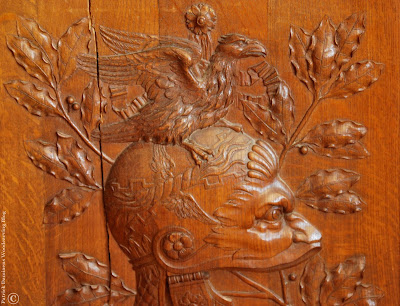
the decoration because they radiate wealth and power. The Salon Arenberg on the
ground floor features an oak wood paneling with beautiful wood carving in
French Regence Style.
 |
| De WARANDE in Brussels | Decorated paneling and paneling with ornaments. |

The grand
salon on the first floor, the Zinnerzaal, is opposite to the gallery and thus
adjoins to the monumental stair hall. Here too, the oak paneling was carried
out in Regence style. They reach to the ceilings; whose borders are decorated
with stucco.
From the
grand Salon, a double door has a view of the underlying little White Salon.
This is
practically completed in a neo-Louis XVI style, the style of the royal square
and some mansions in the park. It is also typical of the 18th century to create
a “enfilade” of rooms. That is a series of contiguous rooms in one axis.
From this
Grand Salon, you can see through the open doors into five other rooms.


 |
| sculpted mantelpiece |
 |
| Hotel Empain, a unique meeting place in the heart of Brussels. |

 |
| De WARANDE in Brussels | Decorated paneling and paneling with ornaments. |


A few
remarkable personal discoveries.
Because I
am professional, engaged in the design and execution of ornaments in wood and
the appropriate styles, over the years I have been able to compile a
comprehensive archive; documents, old prints and books containing images of
interiors, as well as recent reference books about furniture, interiors and
castles. On top of that, the gypsum prints and study objects are a great source
of inspiration, they hang from the wall of my wood carving studio.
But, the
main source of inspiration is my own photo archive that I have being compiling
for the last 30 years. Detail surveys of the application of ornaments that I
have collected in museums, antique shows, private collections, private houses
and castles. All style periods and the different applications of the
ornamentation are included; not only in wood, but also in marble, stone, or
bronze… Through this extensive archive, I have developed a bit of “a good
visual memory” if it is about ornamentation.
It came to
my attention that the furniture makers/ornament-maker who created the paneling
in De Warande should also have been in possession of an extensive archive. I
recognized a number of outstanding details in the paneling and doors, which
could only be drawn / designed by people in possession of books and / or gypsum
models of an old composition.
Below are
some examples that support this finding.
Salle de
Guerre, Versailles Castle, France.
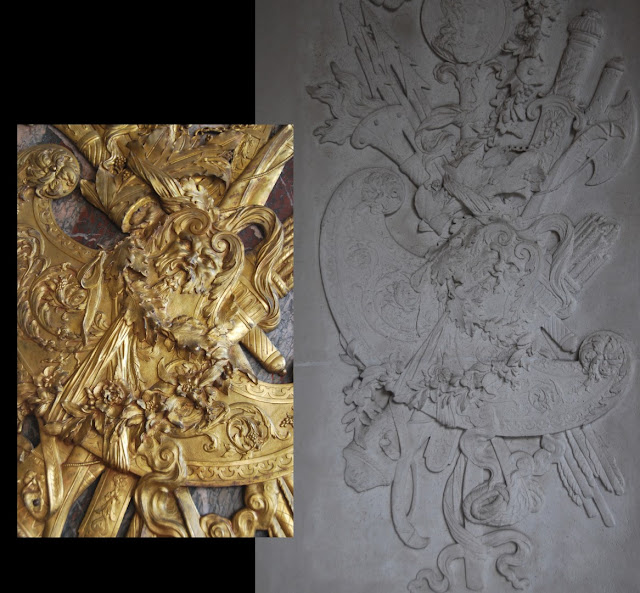

Left, Salle
de Guerre Versailles (FR), right De Warande showing the same motif in stone.
Rambouillet
Castle, France.


Left,
Rambouillet Castle (FR) / Right, same composition on a door.
Gypsum
print of gypsum foundry,
Art Museum and History in Brussels.
Art Museum and History in Brussels.

Museum of
Art and Decoration, in Paris.

Museum of
Art and Decoration, In Paris, B/W photo.
Translation, Lis Alvarado
Website De Warande
http://www.dewarande.be
Translation, Lis Alvarado
Website De Warande
http://www.dewarande.be
Allow me to
close this section of the “De Warande” interior observations. As I mentioned
before, the diversity of different paneling and ornaments, it’s simple to much
to grab it all in just a single blog entry.
I hope that
you have been able to form a picture of De Warande, its atmosphere, the style
periods and stylish rooms.
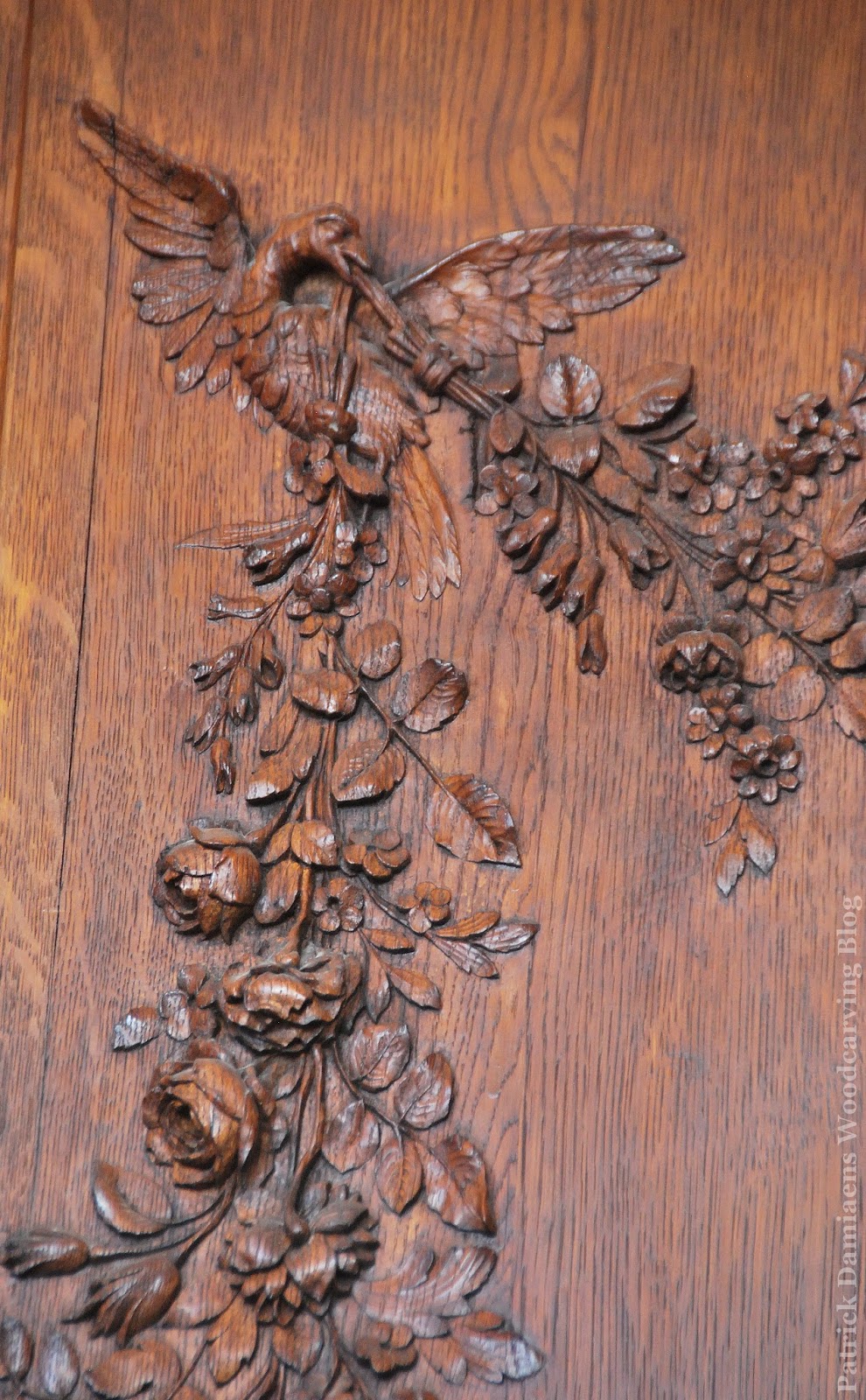
Below, you
will find some of the moods and details of the paneling with ornaments that may
be useful.

 |
| Ornamental wood carving carved on paneling |


 |
| De WARANDE in Brussels | Hotel Empain. Carved paneling |

 |
| “De WARANDE” in Brussels |


 |
| De WARANDE in Brussels / Hotel Empain. |

 |
| De WARANDE in Brussels / Hotel Empain. |
 |
| https://www.patrickdamiaens.info |
 |
| Link FB Page |