Welcome to my Blog
This is a place where the visitors are confronted with their search for a personal touch and where they have an opportunity to get acquainted with a skilled expert, who has turned durability and tradition into a personal passion.
I hope this will become a valued and rich source of inspiration and knowledge. Please Leave comments and enjoy your visit. Please note text and pictures on this blog are Copyright protected.

Showing posts with label 'architectural wood carvings'. Show all posts

Saturday, 11 November 2017

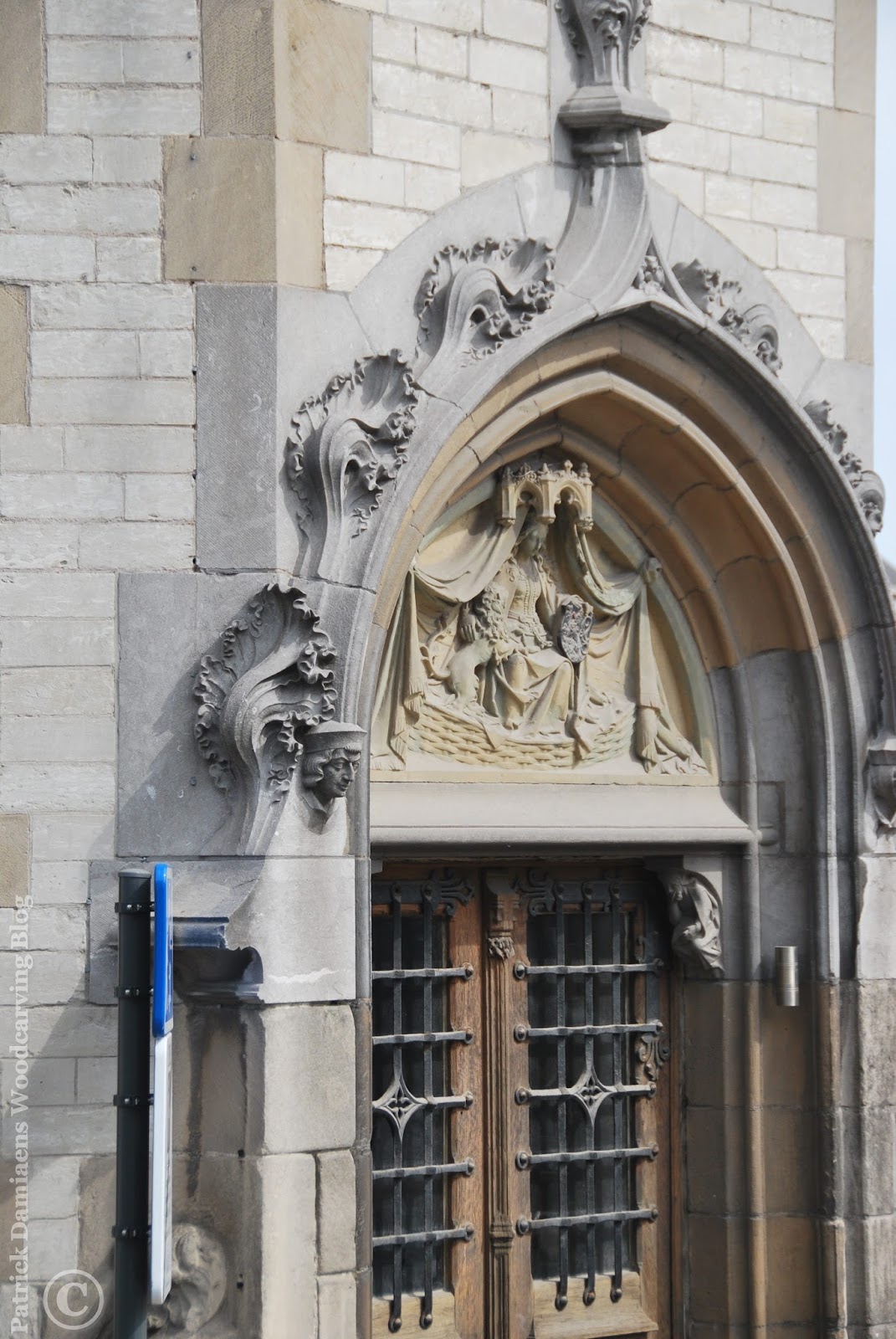
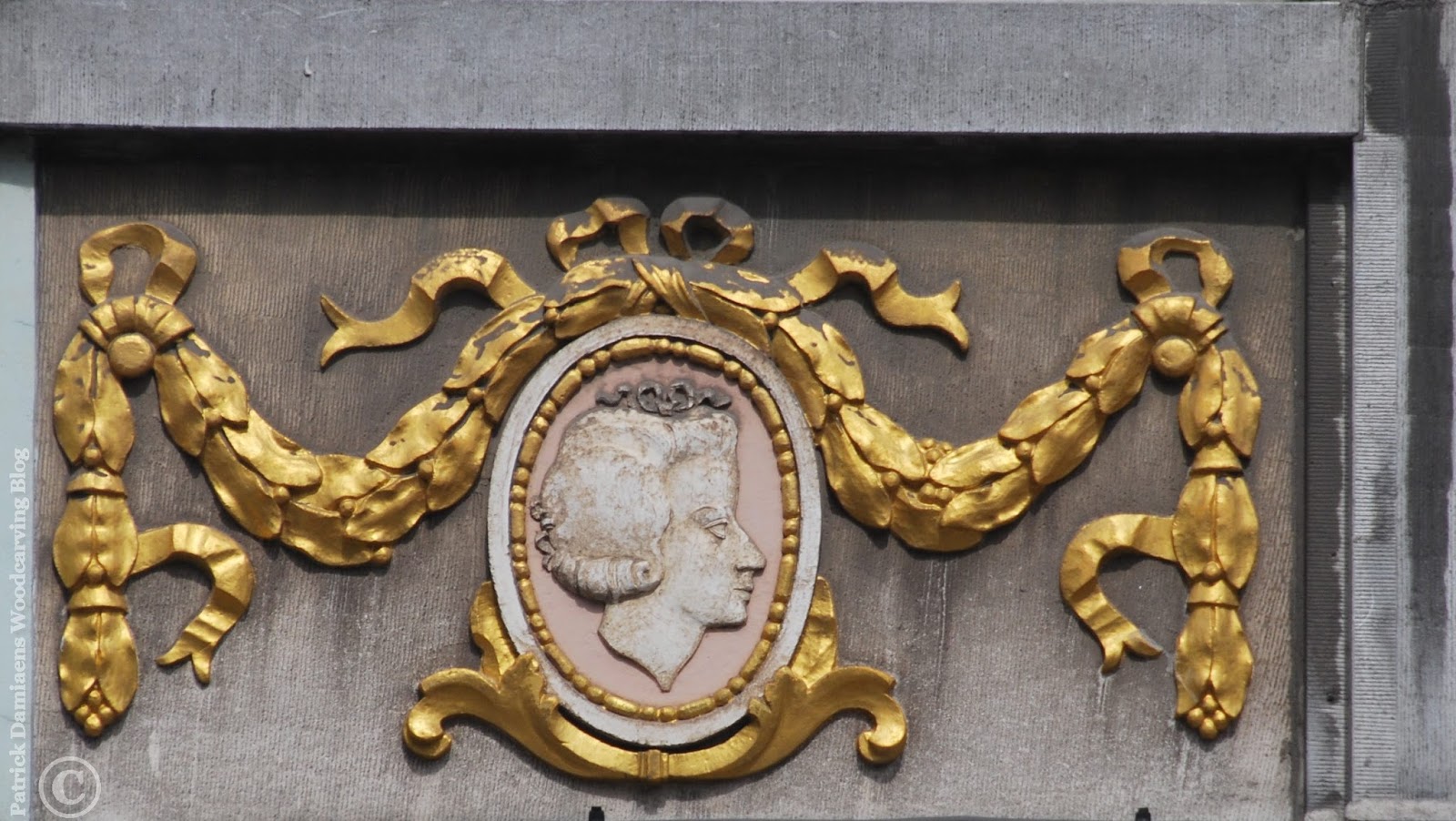
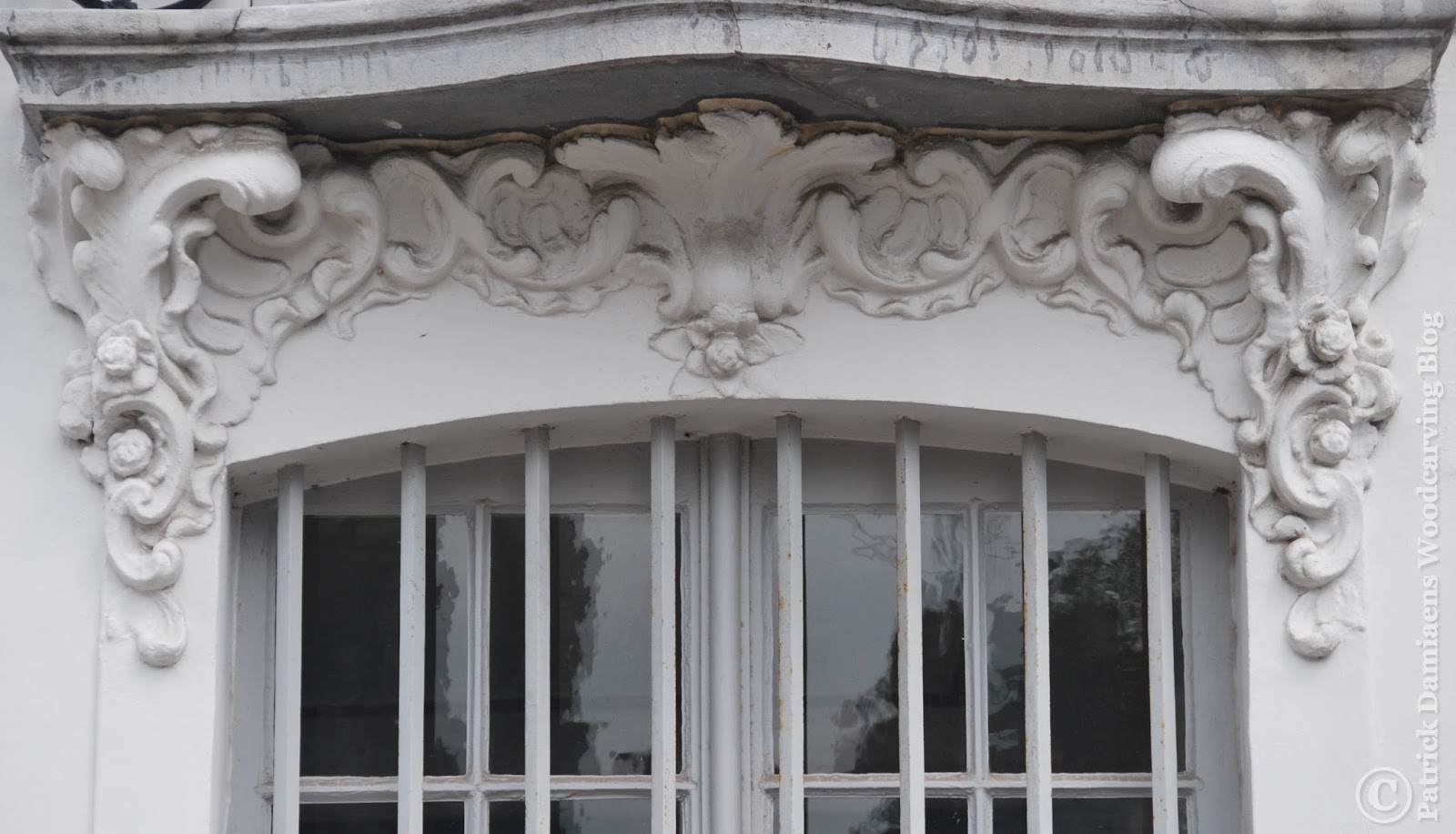
The City of GHENT | Architectural detail in WOOD and STONE | Ornamental Detail in the streets of Ghent (Belgium)


Ghent, Europe’s Best Kept Secret

The undiscovered Flemish jewel of a city boasts an opera house, a handful of museums, even more ancient churches, and countless bridges spanning the two rivers that wind themselves through the city. The true joy of the town is to be found whiling away an afternoon in an outdoor café. Whether your wrapped under blankets sipping a coffee in the winter or sunning yourself in the springtime with a cold Belgium brew, you will fit in with the locals if you simply enjoy the great atmosphere this town offers. If possible, find a seat on the Graslei, a scenic canal spot in the centre of town, with a great view on the many bridges, grand houses and medieval buildings.


Alternatively, hop on a bike and explore the nearby Patershol district with a small labyrinth of charming cobblestone streets, the towering Gravensteen Castle and Unesco recognised bell tower. The laid back atmosphere of this liveable, lovable city means enjoying the vibrant nightlight of a university town then quaffing cava at the flower market the following Sunday morning.

Saturday, 11 June 2016

A overdoor ornament in cherrywood | Custom-made architectural carvings | A carved sopraporte

A overdoor ornament, a supraporte

A overdoor ornament carved 
in cherrywood

A blogentry from this site:

In this blog item I will show you several stages of the carving process for an overdoor (supraporte in Latin) with the help of some pictures. An overdoor is a decorative piece (a painting, bas-relief or in this case a carved panel) placed above a door and can also be incorporated within the cornice of a door frame,

The assignment
The assignment in this case entailed two overdoors in cherry wood, which were designed and created in the spring of 2016 for a client in Texas (US)

The preconditions
The client had a number of personal wishes, which he wanted to see incorporated in the overdoor carved from cherry wood. These decorations would become a part of the already existing wainscoting (or paneling), which was also made of cherry wood.

A carved sopraporte


The design
The eye-catcher is the oval cartouche placed at the center, depicting a cross with an open bible on top. On the left page, we see the letter Alpha and on the right the letter Omega. Alpha and Omega are the first and last letters of the classic (Ionic) Greek alphabet. For Christians, the two letters together symbolize God’s omnipotence.

On the left-hand side, we see a number of arrows come out from under the cartouche and on the right-hand side we notice a torch. All these elements were part of the personal wishes of the client. The whole piece is tied together by a bow, a ribbon and some foliage. This elongated trophy in cherry wood has a maximum thickness of 45mm. This type of wood is extremely hard and therefore quite difficult to carve


History

A supraporte or overdoor (Latin: supra=over; porta=door) is a decoration applied over a door or over a portal.
The term “decoration” is interpreted on a broad way. The decorations can be a painting, a fresco painted on the wall, a sculpture or a carved or plastered relief.
Sometimes the painting is made in “grisaille” style. That is, the 3D picture is in one color (black or brown) in different shades and is imitating sculptures in stone. A relief work, embossment, mostly to be found in the Rococo cartouche at the “supraporte”.
Embossment may also be found integrated with the lintel of the door frame.

A supraporte in the form of a flat triangle is called tympanum. 


A supraporte could be found –taking into consideration the height of the ceiling- in a horizontal or in a vertical position. For example, the overdoor of an exterior door or portal can even reach to the roof.
A supraporte for an inside door is not only adapted to the height of the ceiling, but can incorporate work that also represents the origin of the owner of the respective room or the building in which it is located.
In the old times it was extremely important to show the social position of the owner, and the supraporte was a good way to show it. 

The (self) glorification of the owner/resident could show his/her monogram or the family coat of arms, being the central role in the entire composition of the ornaments of the supraporte.
In de Palace of Versailles you could find several rooms that have the crossed L of Louis XIV or the three lilies of France, a glorification of the country and of the king. 


Custom-made architectural carvings | Patrick Damiaens talks about an OVERDOOR ornament


The decorations and ornaments of a (wooden) supraporte may be use in a different way. A door trim for a music room (some rich people has it), could be decorated with musical instruments. The same theme can also be incorporated in the over door, design that every visitor could instantly identify the function of the room.

Other government or secular buildings with their own and specific function, demonstrate again their own importance with the use of the supraporte. So the glorification or function will be shown in a central cartouche. 
For example, through the use of attributes in a trophy, like “law”, “science”, “army”, the supraporte works as a way to make emphasis and to be the focal point; the visitor will be aware where he is standing. 

Worship buildings have –of course- other themes; so there are religious images in bas relief carved, locating or not in an oval cartouche.
But there are also trophies with religious attributes, such as the following:  candles, candlesticks, chalices, bibles, censers… which are a central focal point in the composition.

In each style period, from the Renaissance you can find the use of the over door. Usually in castles and residences, and later in major civil houses and government buildings; but always adapted to the mentality and way of decoration and ornaments. 
For this reason, the decorations vary from country to country, and have its own characteristics.
Nowadays, it is possible to find a supraporte with a family photo, a religious sign or paintings; unconsciously connecting you to an ancient tradition of over doors. In that case, it is not functional but decorative in nature.   


Here are some pictures. 
The different stages of process. 
A OVERDOOR ORNAMENT 
carved in cherry wood.

________________________
______________

Custom-made architectural carvings | A supraporte ornament

Modelling the supraporte


Carving of the details in the supraporte


Patrick Damiaens | Carving a supraporte ornament


 A overdoor ornament in cherrywood | Custom-made architectural carvings

Last detail, leaves and berries on the oval cartouche

https://www.patrickdamiaens.info


Our FB Page


Sunday, 23 February 2014

Custom made FRONT DOORS | Architectural ornament and decoration | Copying a front door decorated with wood carving


Custom made front doors
 “Copying a front door decorated with wood carving”


It happens quite often that a carpenter or joiner relies on my craftsmanship, i.e. my expertise as a wood carver, and my knowledge of ornaments and decorations. Many of them take on a commission, but often they do not know how to include and execute ornaments and decorations in wood. At times like these a collaboration between the carpenter/joiner and wood carver is inevitable. It goes without saying that the final result can only benefit from such a partnership.


As subcontractors we have been making ornaments and decorations for in and outdoor joinery for well over 25 years now. A local carpenter was troubled with the following situation: he was asked to copy a classical double front door. This late 19th century door was ravished by the sands of time. Chronic exposure to moisture had caused irreparable damage, and besides, the door no longer met the standards set by the client and the requirements of contemporary outdoor woodwork.


However, the customer had a keen eye for detail and historic value and therefore wanted the carpenter to produce an exact replica of the existing front door. The idea was that after renovation the façade truly had to be an eye catcher in the historic city of Tongeren (Belgium).


The city of Tongeren is located in the south of the Belgian province of Limburg, not far from Liège, the French speaking part of Belgium. Starting from 15 BC Tongeren quickly developed as a Gallo-Roman settlement. It is the oldest city of Belgium. The Gallo-Roman museum and the gothic 14th century basilica are just a few of the touristic highlights. Furthermore, the “Kroningsfeesten” or Coronation festivities are organized every 7 years and every Sunday it is possible to visit the largest antique and second hand market in the Benelux. ( =Belgium, Netherlands, Luxemburg)

The original front door with carving, Tongeren(B)


 ______________________________
___________________________

Some detailed images of the ornaments


African Padauk

The door was manufactured in African Padauk; also known as African Coralwood. This type of wood is categorized as durability class I. An extremely durable, valuable and stable type of wood originating from central and tropical west Africa. Beautiful coral red to purple brown heartwood that is suitable for high-end applications such as outdoor joinery.

African Padauk heartwood has a coral red color, hence the name African Coralwood. It is also used as a dye in the textile industry. I experienced this first hand.

"Padauk ' used as a dye in the textile industry," experienced firsthand.

The wood pulverizes easily and stains skin and clothes, which causes slight skin and airway irritability. When unfinished direct light results in rapid discoloration of the wood from red to brown.

The color of the heartwoods differs depending on the geographical location. Under optimal growth conditions the color is coral red with black stripes (Gabon) or uniformly red in Cameroon. Near the edge of the growth area (Congo, Congo-Brazaville) the heartwood contains ugly white spots. This, however, does not alter the durability or mechanical properties of the timber.


The wood grain is relatively fine with an even structure, but, as is the case with all types of tropical wood I worked with, African Padauk wood has an interlocked grain. This type of grain makes it difficult to apply wood carving to larger panels, compared to types of wood with a straight grain. But for this particular door there were only a few decorative elements (several frames with wood carving). Therefore the presence of an interlocked grain did not constitute a major problem.


The front door with carving and prime color


UNIQUE FRONT DOORS, Custom made


https://www.patrickdamiaens.info