Welcome to my Blog
This is a place where the visitors are confronted with their search for a personal touch and where they have an opportunity to get acquainted with a skilled expert, who has turned durability and tradition into a personal passion.
I hope this will become a valued and rich source of inspiration and knowledge. Please Leave comments and enjoy your visit. Please note text and pictures on this blog are Copyright protected.

Wednesday, 22 August 2012

THE COUVEN MUSEUM IN AACHEN | Period Style Interiors | Aachen-Liege Style Furniture


Patrick Damiaens 
Ornamental Woodcarver

Visit of
The Couven museum
 in Aachen (Germany)


During the reconstruction of Aachen into an 18th century Baroque bathing resort, Johann Joseph Couven (1701 - 1763) and his son Jakob Couven
(1735 - 1812) achieved a mastery of their craft that made them famous far beyond Aachen. From 1739 until his death, Johann Joseph Couven was active
as an architect, an engineer and as civic secretary.
Couven‘s first major sacred building, the abbey church of St. John the Baptist in Burtscheid, built from 1730 to 1754, is considered to be one of the most important Baroque churches in the region between the rivers Maas and Rhine.
The only surviving building by his son Jakob Couven is Haus Monheim. It is used today as a museum, and is dedicated to the work of both architects.
The Couven Museum


Haus Monheim lies in the historic town centre, close to the Cathedral, the Town Hall and the old bathing and spa centre at Büchel. After the town fire, the apothecary Adam Coebergh bought the plot of land in 1662 and had a pharmacy built there. The importance of the pharmacy for Aachen as an emergent spa and bathing resort is clearly evident in the support
willingly provided by the city, which supplied 8,000 bricks for the new building.


Aachen Style Furniture (Carved in Oak)
In 1786, Andreas Monheim, who had acquired the house in 1783, commissioned the architect Jakob Couven with its renovation. It was Couven who gave the building its familiar, present-day appearance.
Andreas Monheim left the house to his only son Johann Peter Josef Monheim, a man destined to become one of the most influential figures in 19th century
Aachen. He played a crucial role in shaping the fortunes of his home town and, by building hospitals and nursing homes, strove to ease the social problems
arising as a consequence of industrialisation. As a token of gratitude, he was made an honorary citizen of Aachen.


In 1958, the former Director of Civic Museums, Felix Kuetgens, established the Couven Museum in the house. There had already been a museum with this
name in House Fey on Seilgraben, but it had been destroyed during an air raid in 1943. In 1967, the museum was extended by Peter and Irene Ludwig, née
Monheim. They had the former neighbouring house “Zum Lindenbaum” decorated with more than 6,000 precious tiles, which they donated to the museum in 1982.


Today, Aachen‘s very own “front room” offers a permanent exhibition of domestic culture and home decor of the 18th and 19th centuries, supplemented by interesting temporary exhibitions on cultural and art history themes.


Opening times:
Tuesday – Sunday
10.00 am – 6.00 pm
The whole building may be closed to the public due
 
Couven-Museum
Hühnermarkt 17, 52062 Aachen
Telefon +49 (0)241 / 432-4421 or
+49 (0)241 / 47980-20 (guided tours)
info@couven-museum.de
Source: Couven Museum
tekst:  Michael Prömpeler

Architectural Carving Custom-made | TRADITIONAL WOOD CARVING | MASTER WOODCARVER PATRICK DAMIAENS | Custom-made Ornaments


Architectural Carving
Ornamental Woodcarver 
Patrick Damiaens

By Denzil Walton Journalist


In the 17th century, the Belgian town of Liege became highly prosperous through its coal mining, metal processing and glass refining industries.
Over the years, it evolved into a fashionable residence for princes, aristocracy and wealthy merchants who could spend lavishly on expensive furniture. As most skilled craftsmen from the surrounding regions were invited to work there, the city soon became famous for Furniture characterized by beautifully and delicately carved decoration. 

Woodcarving studio - Architectural Carving  Patrick Damiaens in Belgium

Three hundred years later, Liege-style furniture is still being created and carved to the highest levels of quality. From his workshop in Maaseik, Belgium, Patrick Damiaens is a reassuring reminder that even in these days of mass-manufactured furniture, there is still a demand for the traditional skills of a master artisan. He studied three years at the Don Bosco Institute in Liege, where he learned the complex trade of ornamental woodcarving. He spent six years studying furniture- making and one year woodcarving in his
hometown of Maaseik. Today, Damiaens is the only full-time ornamental woodcarver in Flanders, the Dutch-speaking half of Belgium.

Patrick works in close cooperation with four colleagues: a staircase-maker, two cabinet-makers and a furniture restorer. Between them, they turn planks of rough French oak into stunning cupboards, chests of drawers, wardrobes, door frames, staircases, stereo cabinets and decorative panels. We can make and decorate virtually any item of furniture,” Damiaens exclaims enthusiastically.


To make an item of Liege-style furniture is a highly complex process. The preparatory technical drawings can take a full month and every item of furniture requires a totally new set of drawings. His first task is to make a rough sketch of the pattern, which might be based on an original item of furniture or created by Damiaens himself. This is then presented to the customer.
The final technical drawing is redrawn on tracing paper and pinned to the selected panel of wood. The design is then transferred onto the wood, which in most cases is French oak.

Liege style furniture

The next stage is the only time that Damiaens uses a machine (apart from one to sharpen his tools). He skillfully manipulates a router to remove the bulk of the wood surrounding the design, after which the actual hand carving can begin. 
With respect, patience and much artistic craft, Damiaens carves each motif until he finds the right expression and character. Once the carving is completed, the panel is returned to the cabinetmaker to be treated and incorporated into the intended piece of furniture, be it an 18th century reproduction piece or an individual creation.

Architectural carving for panelling

Damiaens is enthralled with the variety of projects he is asked to undertake, as well as the larger pieces of furniture which easily take eight months to a year to complete. For a German client, he is currently building and decorating a Georgian-style library. In between these large projects, he carves and decorates a range of smaller, custom-made architectural carving.
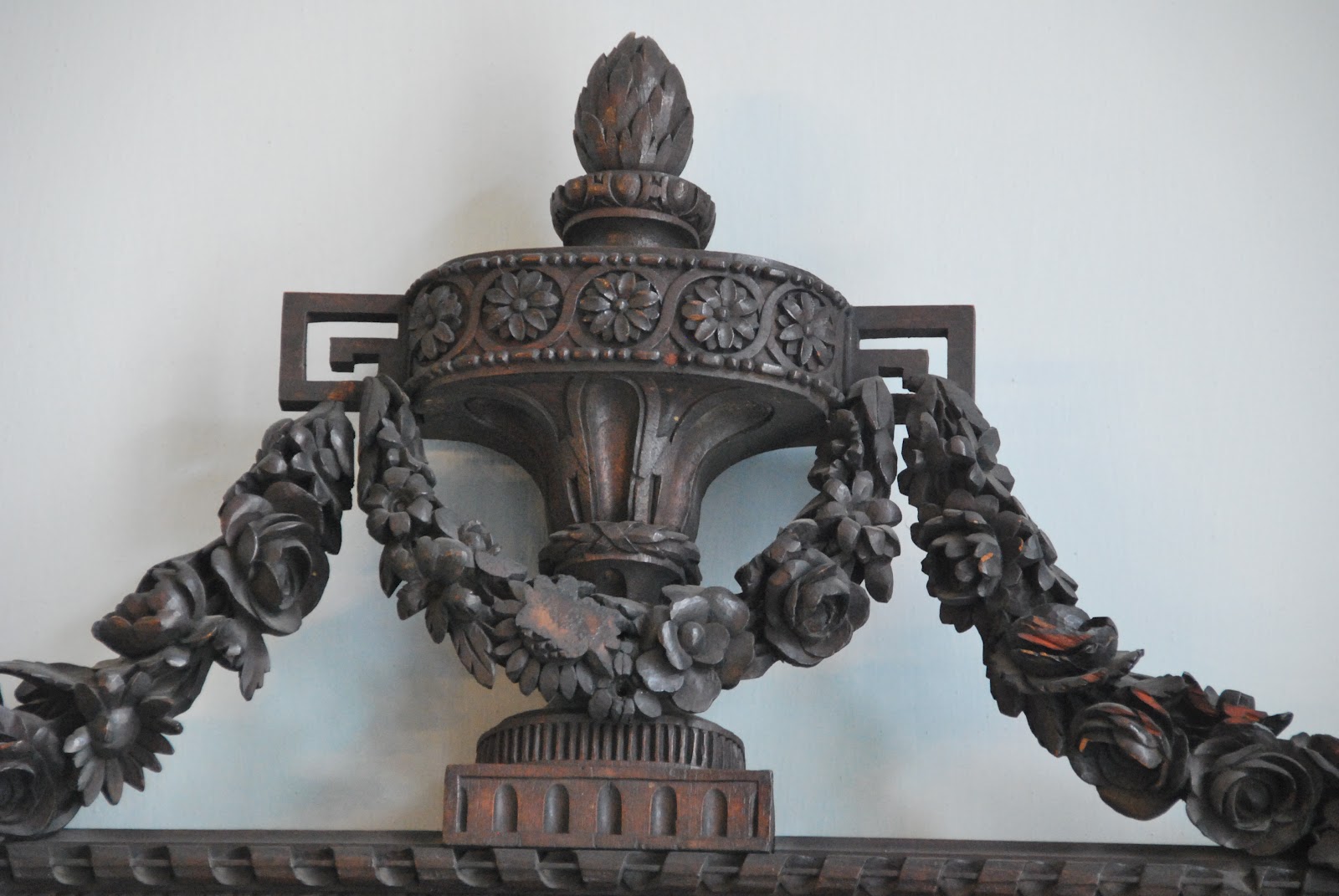
Patrick likes to challenge himself with exciting new carving designs. Most recently, he is utilizing the style of 17th century English woodcarvers, who created wonderful trophies and exquisite cascades of flowers, fruit and leaves, which are applied to paneling, walls and even chimneys. 


So detailed and refined are these carvings that in certain light they look natural and lifelike, and have been likened to lacework.

“I still try to add a personal contemporary touch to these high-relief carvings,” explains Damiaens. “I see them as my children.”

By Denzil Walton
 

Monday, 20 August 2012

RASTATT RESIDENTIAL PALACE | BAROQUE RESIDENCE | EXQUISITE ORNAMENTAL CARVING


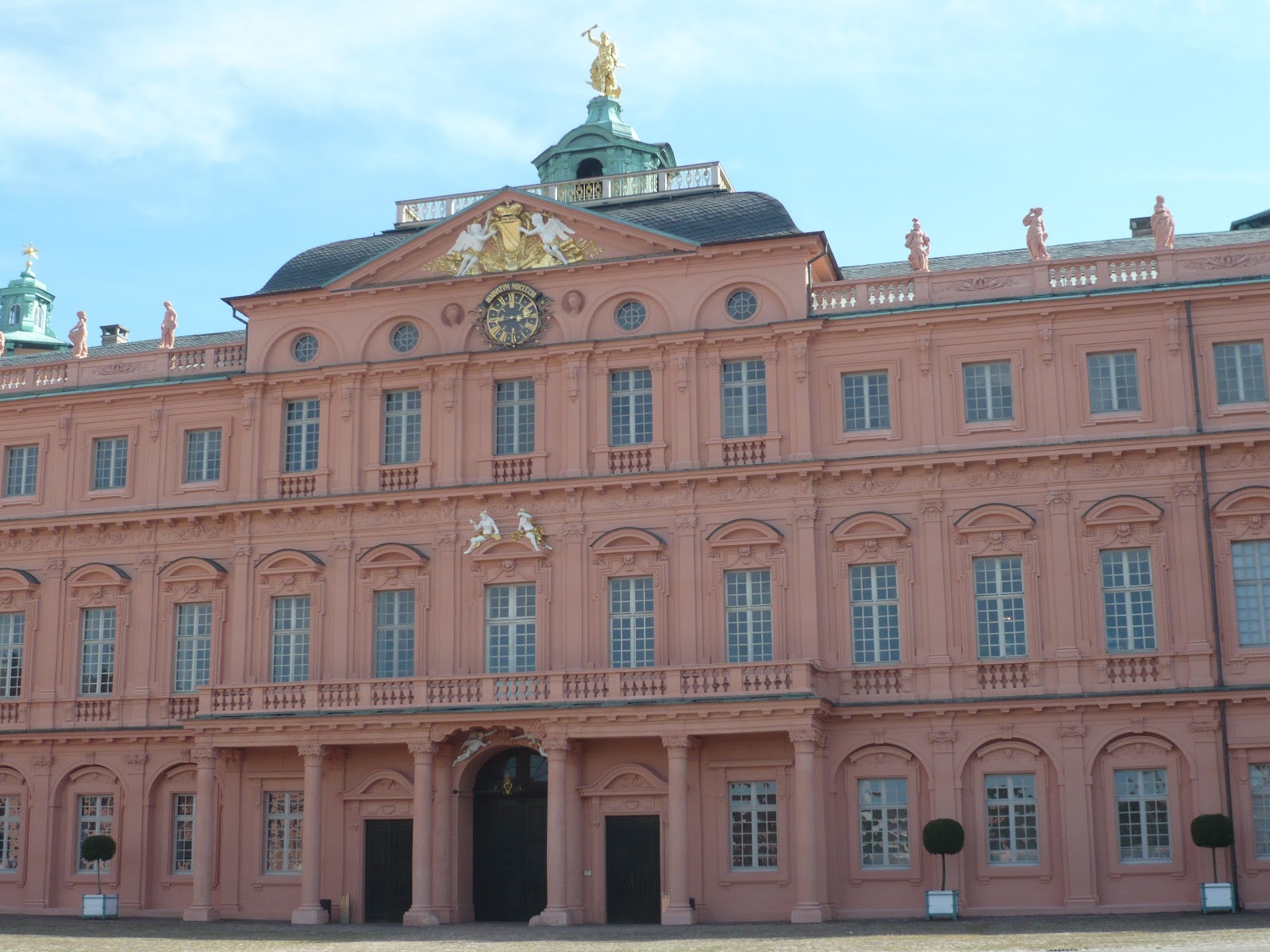
Visit of Schloss Rastatt in Baden-Württemberg (Germany)

Beautiful Baroque and Rococo interiors.


Rastatt  Residential Palace is the oldest Baroque residence in the Upper Rhine Valley. The palace, gardens and town were planned as a whole, to create an impression of elegant, perfectly-with the palace commanding pride of place at the centre.

Rastatt  Residential Palace


Schloss Rastatt is a historical building in Rastatt, Germany. The palace and the Garden were built between 1700 and 1707 by the Italian architect Domenico Egidio Rossi as ordered by Margrave Louis William of Baden-Baden.


A large staircase with stucco decorations give way to the Belle-etage. The biggest and most decorated hall is the Ahnensaal . It is decorated with numerous frescoes and shows paintings of ancestors and of captured Ottoman soldiers.

Rastatt  Residential Palace, Interior


Rastatt Residential Palace is the epitome of a Baroque residence designed to display the might of an absolutist monarch: the visitor must First cross an expansive grand courtyard, surrounded by an imposing three-wing complex.


Decorated with plasterwork, the two staircases at the rear of the courtyard lead to the centrepiece of the extensive main building, the Festsaal (banqueting Hall).


The Baroque complex has withstood the test of time almost unscated.Today the palace gardens are open to the public, with a modern slant on Baroque garden design.
The Military History Museum and the commemorative site for freedom movements in German history, which are both located in the palace, all make Rastatt Residential Palace well worth a visit.


Source  Rastatt Residential Palace


Friday, 17 August 2012

GRINLING GIBBONS STYLE OF CARVING | FOLIAGE CARVING IN LIMEWOOD | HIGH-RELIEF WOODCARVING


PATRICK DAMIAENS,
This is a place where the visitors are confronted with their search for a personal touch and where they have an opportunity to get acquainted with skilled experts, who have turned durability and tradition into their passion.


This carving is a special order for a dentist in Germany. This garland is carved in lime and placed in the library of the customer, above the entrance door. (Over-Door , supraporte).

The library is made in solid oak, the supraporte-carving in limewood, so you get a nice color difference, not abnormal, because It was common in the 17th century English castles.


This is a good example of this technique.

The high-relief carving is made in the carving-style of Grinling Gibbons (17th century)
 
The tools of the dentist are incorporated in this festoon.

First I made a sketch:


Modeling:


And then there are several stages
to achieve the end result:


The initials of the client included in the garland.


CARVED GARLAND

ON YOUTUBE:
 Foiliage carving , supraporte   PART 1


 Foiliage carving , supraporte   PART2


MORE INFO:


https://www.patrickdamiaens.info


Wednesday, 15 August 2012

LIEGE STYLE FURNITURE | Handcrafted PERIOD STYLE FURNITURE | HANDCARVED CUSTOM MADE FURNITURE


Reproduction and personal creations. 
Liége-Style Furniture of the 18th-century.


The Belgian “Liége style furniture” with its typical ornamentation is undoubtedly the most refined period piece in its kind for the connoisseur.
For the ornamental woodcarver as well as for the Furniture-maker it remains quite an endowment and
challenge to hold this 18th-century artistic branch to its highest level.


LIEGE-STYLE FURNITURE
 
The creation of a ‘Liége style’ piece of Furniture starts at the drawing table. Each technical detail, the
framework and each bit of ornamental decoration is drawn fullscale.


Liege-style woodcarving
 
With respect, patience and a lot of artistic craft the woodcarver carves each motive until he finds the
right expression and character. Hence, each piece of Furniture, realisation and application is unique  and cannot be executed twice in the same way. Thus, each creation obtains a timeless and exclusive  aura and will always radiate a certain value for people who want to decorate their interiors to the highest
level of craftmanship.


Liège style furniture is of an exceptional quality, profuse yet delicately decorated and of a solid structure.
It reached its peak in the XVIIIth century.


More information:

MEMBER OF PEARLS OF CRAFTSMANSHIP