Welcome to my Blog
This is a place where the visitors are confronted with their search for a personal touch and where they have an opportunity to get acquainted with a skilled expert, who has turned durability and tradition into a personal passion.
I hope this will become a valued and rich source of inspiration and knowledge. Please Leave comments and enjoy your visit. Please note text and pictures on this blog are Copyright protected.

Showing posts with label 'panelled rooms'. Show all posts

Saturday, 1 August 2015

The CARNAVALET Museum in Paris | 18th century style WOODCARVING | Carved boiserie and paneling | Panelled rooms


Carnavalet in Paris


Carnavalet Museum in Paris
__________________________
____________________

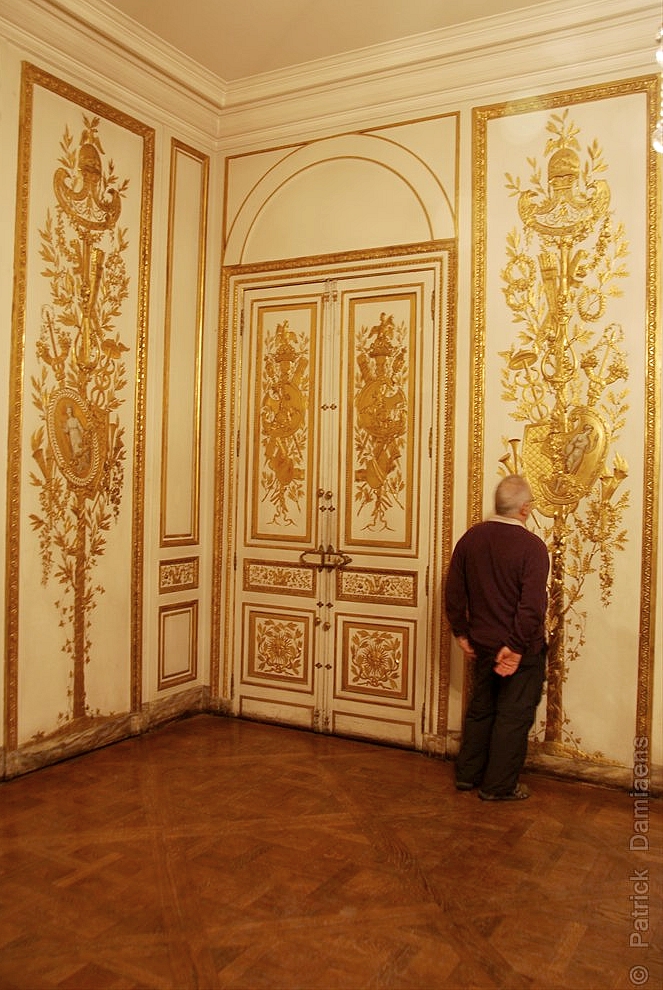
This blog entry is about the visit to the Carnavalet Museum in Paris. A very nice museum  with panelled rooms, boiserie and 17th and 18th century paneling. A  real source of inspiration if you want to see examples of 18th century style woodcarving  and its applications


The Carnavalet Museum is located in the fascinating neighborhood “The Marais”, known for its beautiful mansions, de private “hôtels” (city palaces), but also for the many boutiques, galleries and restaurants.

For anyone who wants to learn more about the rich and turbulent history of Paris, the Carnavalet museum is a must. Carnavalet is also the official museum of the City of Paris.


The collection is chronological and shows the history of Paris, its inhabitants and their troubled times with photographs, paintings and exhibitions.

Some rooms are not open all the time, the schedule with their opening hours hangs at the entrance of the Museum, every day. And something to take into consideration: the access is free of charge.

_______________________________________________
________________________________


The building


The Carnavalet Museum is housed in two adjacent buildings that were known as the Hôtel Carnavalet and the Hôtel Le Peletier de Saint-Fargeau. The entrance to the Museum is located in the main building, the Hôtel Carnavalet from the 16th century. In 1548 Jacques des Ligneris, Paris Parlament chairman ordered the construction of the mansion, known as Hôtel Carnavalet; the construction was completed in 1560. In 1578 the widow of Francois de Kernevenoy bought the property, later known as the Carnavalet building.

During the 17th century thebuilding was expandes and modernized by the “King’s Architect”, Francois Mansart (1598-1666). One of its well-known inhabitants of the Carnavalet was the Parisian aristocrat Madame de Sevigne (1626-1696), wife of the Marquis de Sevigne. She was part of the French nobility and became known as a writer through her letter, which are part of the classics of the French literature.

The Hôtel Le Peletier de Saint-Fargeau, considered a masterpiece of the Renaissance, was built in the mid-16th century. It was originally known as the Hôtel d'Orgeval. It was purchased by Michel Le Peletier and eventually passed to his grandson, Le Peletier de Saint Fargeau (a representative of the nobility in the States-General of 1789).  In 1793, Le Peletier voted for the execution of Louis XVI. In revenge for his voting, the same day of the execution of the King, Le Peletier was assassinated.


Courtyard /gardens


In the center of the small courtyard at the entrance of the Carnavalet Museum is a statue of Louis XIV, the only statue from Louis XIV remained after the French Revolution. The beautiful gardens on the other courtyards are built in a typical formal French style.


Museum

The museum is mainly decorated with sculpted paneling or carved paneling took from another buildings.  Within the two mansions there are particularly room styles that are furnished as in the past. For example, you will find rooms and lounges from the 17th and the 8th centuries; two rooms designed by the renowned classicist architect Nicolas Ledoux. Another highlight is the painted ceiling, made by Charles Le Brun.
I was very impressed by the décor of the Fouguet jewelry (1900). The interior design of the store was made by the famous Czech Art Nouveau designer and painter Alfonso Mucha (1860-1939). Well worth the reconstruction of the ballroom of the Hôtel de Wendel, from the early 20th century.

 Panelled Rooms


Besides the historical rooms, there are also objects from the Roman era, antique maps and paintings depicting Paris through the years are exhibit. Around 2,600 paintings; 20,000 drawings and 300,000 engravings; 2,000 sculptures and 800 pieces of furniture are included in the collection of the Museum and together with thousands of other object, are the base of the collection. There are even some rooms decorated with personal items and belongings of some Parisian celebrities, such as Marcel Proust.

The beautiful style rooms with sculpted -carved paneling in Louis-styles are magnificent decorated with many works of art (paintings, drawings, and graphic work), applied art and archaeological objects. For those who are only interested in the most important art collections, he better skips this museum.


A visit to this museum is for sure more than worthy.
___________________________
____________________


The museum began to take its present form when the Hôtel Carnavalet was expanded in 1989 when it started using some rooms of the het Hôtel Le Peletier. Within each of the two mansions are entire rooms from certain periods in history on display.

The collection is primary organized chronologically and shows the history of Paris till all the way back to 1789, in more than 100 rooms.


© Text and pictures, Patrick Damiaens
Translation  Lis Alvarado

Website: 
http://www.carnavalet.paris.fr/en/museum-carnavalet


Some pictures from my last visit 
to this charming Parisian Museum (2014).
___________________
_________
 Carved boiserie and paneling | The Carnavalet Museum Paris

Carved Panelling


Carved and gilded panelling |  Boiserie | Carnavalet Paris


Oak carved Panelling

 Panelled Rooms

18th century style WOODCARVING

The CARNAVALET Museum in Paris


18th century style WOODCARVING

The CARNAVALET Museum in Paris

18th century style WOODCARVING


 A book about the carved wall panelling


A book about the carved wall panels or 'Les Boiseries' Musee Carnavalet, for sale in the museum shop, highly recommended.

Editions Vial, Les boiseries du Musée Carnavalet (2010)
ISBN: 978-2-85101-147-3


Musée Carnavalet
16, rue des Francs-Bourgeois
75003 Paris

Opening hours
From Tuesday to Sunday 10: 00-18: 00
Last entrance at 17:30.
Closed Monday and holidays

website

http://www.carnavalet.paris.fr


https://www.patrickdamiaens.info

LINK FB PAGE


Sunday, 2 March 2014

The Musée NISSIM DE CAMONDO in Paris | 18th Century Art and Antiques | French decorative arts | Period Style Interiors


The Nissim de Camondo Museum
 The Musée Nissim de Camondo
_________________________________________
______________________________________

Visiting Museums and Castles is Probably the main source of inspiration for the Ornamental Woodcarver.
These are places where the craftsman gets his ideas, he is looking for new challenges and always new unexpected surprises, and even after 25 years still feels something new to learn.


Exploring and studying ,looking at problems and how your colleagues 300 years ago solved them, their knowledge of  tasteful proportions used in the interior decoration and their knowledge of carving techniques.

In this blogitem we visit Nissim de Camondo in Paris

have fun with reading
Patrick Damiaens

The Musée Nissim de Camondo is an elegant house museum of French decorative arts located in the Hôtel Camondo, 63, rue de Monceau, at the edge of the Parc Monceau, in the 8th arrondissement of Paris, France.
____________________________________________
______________________________________

Nissim de Camondo, Great Study

One of the most sumptuous private homes from the early twentieth century in Paris
Moïse de Camondo, a reputed Parisian banker during the Belle Epoque, was a passionate collector of French furniture and art objects from the eighteenth century, ans he amassed a collection of unusual quality. In 1911, he hired architect René Sergent to build a private mansion next to Parc Monceau that would be worthy of this collection and suitable for his family. The design was modeled after that of the Petit Trianon in Versailles, but behind the handsome décor of wood-paneled apartments were hidden the accoutrements of modern life, including kitchens, offices and bathrooms. 
The home, which is fully preserved in its original condition, offers an opportunity to discover the taste of a great collector and to get a glimpse of the everyday life of an aristocratic home.


The Entrance


An exceptional collection of art objects
Antique woodwork serves as a backdrop to furniture by cabinetmarket and joiners working for the Garde Meuble Royal (Royal Furniture Repository) surch as Oeben, Riesener and Jacob. Gilt bronze Clocks and wall clocks, barometers and chandeliers, mounted vases adorn cabinets and boiseries. Two particularly spectacular masterpieces of tableware: the Orloff silver dinner service commissionned by Catherine II of Russia from the silversmith Roettiers in 1770, and the so-called “Buffon” porcelain services, made at Sèvres in the 1780s and fituring a bird decor. Sculptures and paintings also reflect the collector’s sensibilities, with busts by Houdon, portraits by Elmisabeth Vigée Lebrun, landscapes by Guardi and hunting scenes by Oudry.

Nissim de Camondo, The Great Drawing room

Salon des Huet

A family’s tragic destiny
Comte Moïse de Camondo was born in Istanbul in 1860 into a Sepharadic Jewish family that owned one of the largest banks in the Ottoman Empire, established in France since 1869. Moïse de camondo meant to give his mansion and collection to his son Nissim. But World War I broke out, and Nissim was killed in an air battle iun 1917. After this tragic loss, he decided to bedqueath his property to the “Arts Décoratifs”, in memory of his son. The museum opened the year after Moïse de Camondo died, in 1935. During World War II, his daughter, Béatrice, his son-of-law Léon Reinach and their children, Fanny and Bertrand, died in the nazi camps. The Camondo family died out.

Nissim de Camondo,The Library


Here a few pictures  of the beautiful period style interiors
____________________
______________


A museum worth visiting
Musée Nissim de Camondo
63, rue de Monceau
75008 Paris

- Wednesdays to Sundays from 10 am to 5:30 p.m.
- Closed on Mondays and Tuesdays.

Entrance (audioguide included) Full Price 9 €

WEBSITE : NISSIM DE CAMONDO

https://www.patrickdamiaens.info

Wednesday, 29 August 2012

FESTOON CARVED IN WOOD | CARVING OF A GARLAND | Carve A Baroque Style Floral Garland


A Baroque Style Fruit and Floral Garland
Patrick Damiaens
Ornamental Woodcarver

A Festoon or garland


Fruit, tied together in combination with leaves and flowers was a popular decoration in the Roman period, and also later  in the ornamental decoration of the Renaissance and later style periods.


This form of ornamentation, decorative ornaments we can distinguish two different applications
 
1. A drooping form, In English this is called Clusters, "A coherent bundle of fruit and leaves' vertically suspended from a ribbon, and this (if necessary) repeating at the same ribbon. This 'Festoon' was widespread if more length than width were present to decorate. (Pilasters and pillars)

2. The festoon in pending form (most known) hangs from the two ends, is slightly curved and the present fruit and leaves are held together by a ribbon or rope. The correct name is Festoon or garland.
The 2 ends or attachment points are usually in the form of a rosette, button, ribbon or nails. Less commonly, in the form of faces or even skulls.
A festoon in the form of oak leaves, laurel leaves or even seafood tied together is another way which is very common in the ornamentation and decoration.


Origin

The origin of the festoon or the application is actually very simple, in the Roman temples were these festoons of real fruit and flowers hung on the friezes and columns of sacred places. These festoons of fruit and flowers were possible, specific conditions combined with sacrificial animals, skulls or religious artefacts.


This style of decorating was many centuries later (Renaissance) not only in sacred, but also in other (worldly) architectural buildings.
In the Roman period, the empty space above the festoon was filled up with rosettes, masks or figures

Patrick Damiaens, Carving a Festoon

In the Italian Renaissance, these items were replaced on the tombs and ecclesiastical architecture by Putti.
The Renaissance transformed the appearance of the Festoon in a more or less modified form, but it was no longer possible to ignore these types of ornaments  in architecture, decoration and furniture art.

Later style periods will each have their own specific characteristics and influence on this type of ornament.

In the present time of ornamental decoration, it is still possible to apply this ornament in a tasteful way , the following pictures show some possibilities, which were carried out by our Workshop.


Garland carved in limewood

garland in combination with instruments


Festoon carved in wood for a kitchen


 More information about my work as a woodcarver


https://www.patrickdamiaens.info